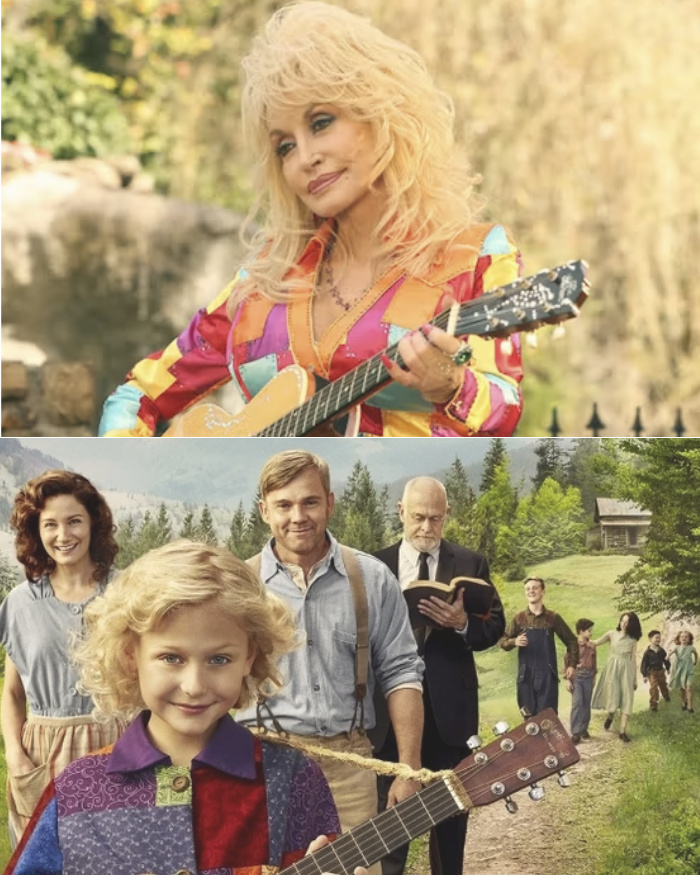
When Dolly Parton was nine years old, she stood by a tiny, freshly dug grave and used the only gift she had to say goodbye to her infant brother. Larry Parton died shortly after his birth in 1955. The sudden tragedy left a permanent mark on the tight-knit Tennessee family. For a young Dolly, the grief was completely overwhelming. Seeking a way to cope, she found her way to his small resting place, sat down, and began to sing. It was a child’s instinctive attempt to soothe a shattered heart and hold onto the baby boy she had so desperately wanted to help raise. In that quiet space, music became her very first sanctuary. Decades later, during the production of her biographical film Coat of Many Colors, Dolly made a difficult, highly personal choice. She directly intervened to ensure the raw scene of her younger self crying and singing at Larry’s grave was kept in the final cut. For the famously joyful entertainer, bringing this specific memory to the screen was never a dramatic calculation. She viewed the recreation as a sacred tribute. She insisted on honoring the brief existence of the little brother who never had the chance to grow up. By choosing to revisit one of her family’s most painful and haunting memories, she revealed the fiercely protective sister behind the glittering public persona. When audiences finally watched the heartbreaking scene, a deeply private tragedy was transformed into an enduring moment of shared empathy, offering a quiet, guiding comfort to mothers and sisters who know what it means to leave a piece of their heart behind.
In July 1955, the Parton family’s cabin in the Smoky Mountains of East Tennessee was preparing to welcome its ninth child. For nine-year-old Dolly, the arrival of another baby was not a burden in their crowded home, but a specific joy she had eagerly anticipated.
Robert and Avie Lee Parton were raising their family in Locust Ridge, an isolated farming community where resources were chronically scarce but older siblings routinely helped raise the younger ones. When Larry Parton was born, Dolly had already staked her claim as his primary caretaker, waiting to help wash, hold, and rock the new baby boy.
But the reality of mid-century rural poverty often carried harsh medical consequences. Larry lived for only four days. His sudden death fractured the household’s steady rhythm and plunged Avie Lee into a deep, prolonged depression.
The loss of the family’s fifth son brought a heavy silence to the usually loud, music-filled cabin. For Avie Lee, the grief of burying an infant just days after delivery was physically and emotionally paralyzing. For young Dolly, the tragedy was her first direct confrontation with a permanence she could not fix.
Unable to process the quiet devastation inside the house, Dolly sought out the small, freshly dug grave near their home. She did not have the vocabulary to comfort her grieving mother or fully explain her own heartbreak. Instead, she sat down next to the disturbed earth and used the only tool she possessed. She began to sing.
It was not a performance. It was a child’s instinctive method of maintaining a connection to the brother she had wanted so desperately to protect. In the absolute quiet of the mountain ridge, music became her sanctuary and her primary coping mechanism.
Sixty years later, Dolly Parton served as an executive producer on *Coat of Many Colors*, the 2015 biographical television film documenting her childhood. The project was designed to chronicle her early years, her family’s financial struggles, and the origins of her songwriting.
Network biographies of beloved entertainers often sanitize early trauma, smoothing over the darkest family chapters to maintain a purely uplifting narrative. When production reached the summer of 1955, Dolly faced a significant creative decision regarding how much of her mother’s breakdown and her own childhood grief to show the public.
She directly intervened to ensure the unvarnished reality remained in the final cut. She insisted that the recreation of her nine-year-old self crying and singing at Larry’s gravesite was necessary to the truth of her history. For Dolly, omitting his brief four days of life to make the television broadcast more comfortable would have been a betrayal of his memory.
Bringing that specific, painful summer to the screen was never a calculated dramatic choice. She viewed the inclusion as a permanent, public acknowledgment of the little brother who never had the opportunity to grow up alongside her.
By allowing millions of viewers to witness the Parton family at their most vulnerable, she revealed the fiercely protective sister that always existed behind the sequined global icon. The choice resonated immediately. After the broadcast, mothers and siblings who had suffered similar silent losses recognized their own history in the Locust Ridge dirt.
The decision transformed a deeply private Appalachian tragedy into an enduring moment of shared recognition. Decades after she first sat down to soothe her shattered heart, Dolly let her voice carry the weight of her brother’s memory one more time.