Forgotten Cord, Fatal Leap: The Shocking Confessio…
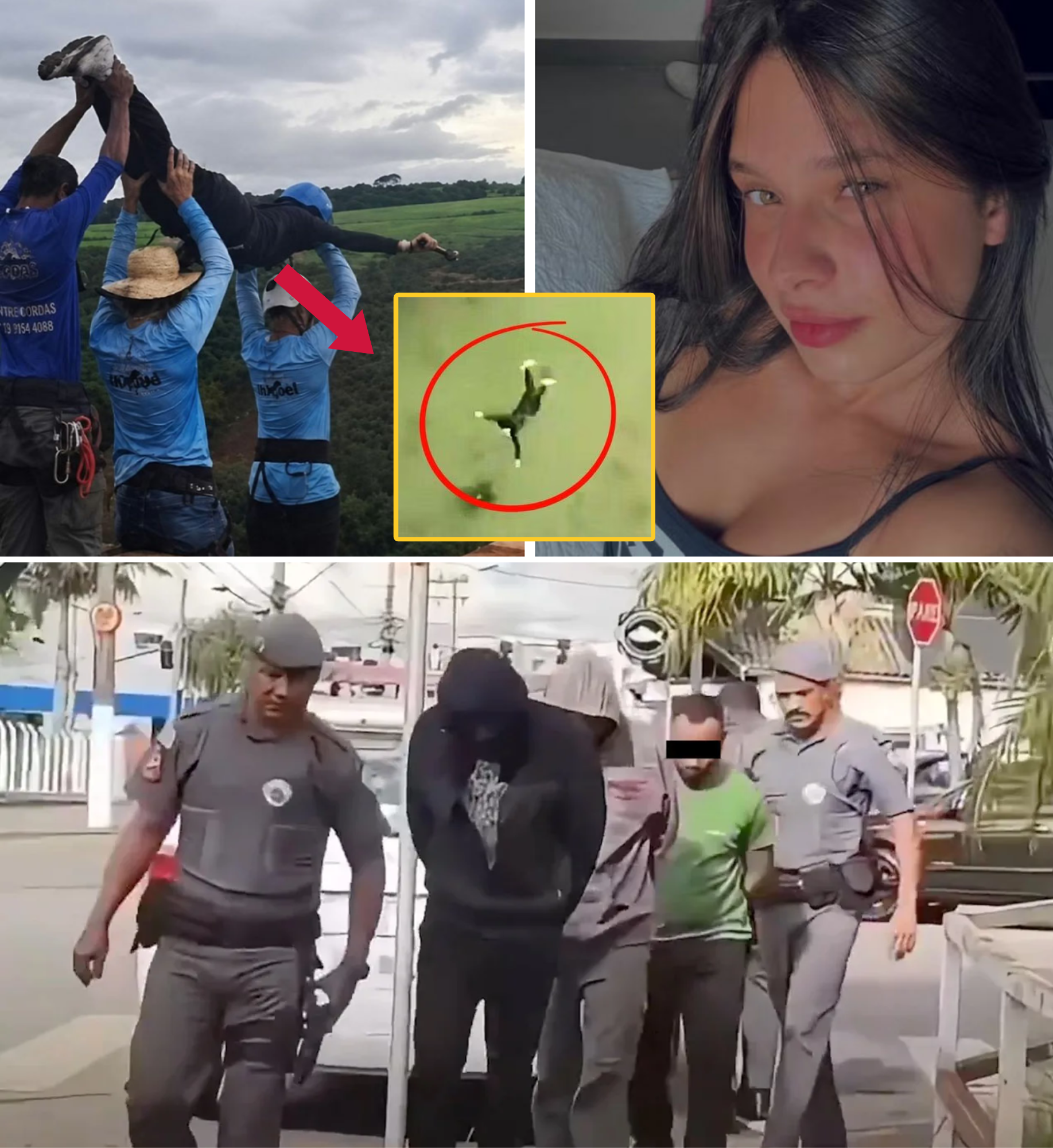
A sunny Saturday afternoon at the notorious Ponte do Esqueleto, or Skeleton Bridge, in Limeira, São Paulo state, Brazil, promised adventure and adrenaline for 21-year-old Maria Eduarda Rodrigues de Freitas. Instead, it ended in unimaginable tragedy when the young woman was launched from the 40-meter (approximately 131-foot) abandoned bridge without any safety rope attached. What began as an exciting rope-jumping experience organized by a private tour company quickly spiraled into a nightmare that has left her family devastated and authorities demanding answers.
Video footage circulating on social media captured the horrifying sequence in stark detail. Three staff members, wearing helmets and harnesses themselves, lifted Maria Eduarda by her arms and legs in a coordinated effort. They carried her to the edge of a plank extending from the bridge and, in what witnesses described as a Superman-style launch, hurled her into the void. A loose rope lay visibly on the ground nearby, unattached to her harness. Onlookers, including her fiancé, screamed warnings too late as she plummeted to the ground below.
Emergency responders and a quick-thinking nurse, Rayza Gabrieli Dias Delfino, rushed to her aid. The nurse found Maria Eduarda still breathing with a weak pulse, but despite first aid efforts, she was pronounced dead at the scene. The impact from the fall proved unsurvivable. Her fiancé reportedly fainted upon witnessing the events, while her mother and other loved ones were left in profound grief. Maria Eduarda was buried the following day in São Paulo.
The three instructors directly involved — men aged 27, 32, and 42 — were arrested at the scene and charged with homicide with “dolus eventualis” or implied malice, a legal concept in Brazil referring to proceeding despite awareness of the potential risk of death. A total of six people connected to the operation were initially detained for questioning. Two individuals reportedly attempted to flee into nearby woods, only to be apprehended with assistance from a military helicopter.
In a development that has stunned investigators and the public alike, the three main staff members later admitted to police that Maria Eduarda was not connected to any safety ropes when she jumped. According to police investigator Andrea Levy, the men claimed they “do not remember” whether they forgot to attach the ropes, who was responsible for doing so, or who failed to perform the critical safety check. This vague and perplexing admission has raised serious questions about negligence, training, and accountability in the extreme sports industry.
The Skeleton Bridge has a reputation for extreme activities, but the operation in question was unlicensed and unregulated. The company lacked proper authorization to conduct activities at the site, and authorities are now scrutinizing their credentials and operational protocols. Police emphasized a failure in verification and supervision as key factors in the fatality.
This incident is not merely an isolated error but highlights deeper systemic issues in Brazil’s adventure tourism sector. Extreme sports like rope jumping and bungee offer thrilling experiences, yet they demand rigorous safety standards, trained personnel, and constant oversight. In this case, basic protocols — double-checking harnesses, ropes, and participant attachments — were catastrophically overlooked. The presence of the unattached rope on the ground, visible before the jump, underscores a lapse that defies basic professional standards.
Maria Eduarda’s family and friends remember her as a vibrant young woman eager to embrace life’s adventures. Her death has sparked widespread outrage across Brazil and internationally, with calls for stricter regulations on adventure sports operators. Many question how such a preventable tragedy could occur in broad daylight with multiple staff present and spectators filming.
Legal experts note that the charge of homicide with eventual intent carries significant weight, potentially leading to lengthy prison sentences if convictions are secured. The investigation continues to determine the full extent of responsibility among the six individuals involved. Prosecutors are examining whether profit-driven shortcuts or inadequate training contributed to the disaster.
The broader implications extend beyond this single heartbreaking loss. Adventure tourism is a growing industry in Brazil, attracting locals and visitors seeking unique experiences. However, incidents like this erode public trust and underscore the need for mandatory licensing, regular safety audits, insurance requirements, and comprehensive staff training programs. Experts advocate for clearer guidelines on equipment maintenance, emergency preparedness, and participant screening.
As the case unfolds, Maria Eduarda’s story serves as a painful reminder of the thin line between thrill and tragedy. Her leap was meant to symbolize freedom and courage, but it exposed fatal flaws in those entrusted to protect her. Friends and family have shared tributes online, emphasizing her bright spirit and the void left by her absence. Communities are rallying around the call for justice and reform to ensure no other family endures such unnecessary pain.
In the wake of the tragedy, authorities have urged caution for anyone considering extreme sports. Always verify operator credentials, demand proof of safety certifications, and never hesitate to ask detailed questions about procedures. Maria Eduarda’s final moments, captured in chilling video, have ignited conversations about responsibility, memory lapses under pressure, and the human cost of negligence.
This case forces us to confront uncomfortable truths about risk, trust, and oversight in recreational activities. While extreme sports will always carry inherent dangers, preventable deaths due to basic oversights are unacceptable. As investigators dig deeper into the “I don’t remember” confessions and the operational failures, the hope remains that meaningful changes will emerge — honoring Maria Eduarda’s memory by preventing future tragedies.
Her story resonates far beyond Brazil’s borders, serving as a global wake-up call for the adventure tourism industry. In an era where social media amplifies both thrills and horrors, this incident reminds us that behind every viral jump video is a real person whose life depends on the competence of others. Justice for Maria Eduarda and stronger protections for thrill-seekers everywhere must now take center stage.