A small silver cross worn around the neck of White House Press Secretary Karoline Leavitt has become the center of an unexpected national conversation, raising broader questions about faith, personal expression, and the boundaries of public office.
The debate began after a social media post questioned whether the 28-year-old press secretary should continue wearing a cross necklace during official White House press briefings. The post quickly gained widespread attention, receiving more than 13,000 likes and thousands of comments from people expressing sharply different opinions.
For some Americans, the necklace represents something deeply personal.

Supporters argue that Leavitt has every right to wear a symbol of her Catholic faith while carrying out her official responsibilities. Many pointed to the First Amendment’s protection of religious freedom, saying that wearing a cross is no different from wearing any other personal piece of jewelry.
Comments such as “Keep on wearing your cross,” and “No one should have to hide their faith” appeared repeatedly throughout the discussion.
Others viewed the issue differently.
Some critics questioned whether highly visible religious symbols are appropriate during official government briefings, arguing that White House press conferences are institutional events intended to represent all Americans regardless of religious beliefs.
While many acknowledged Leavitt’s right to practice her faith privately, they suggested that official settings should remain religiously neutral.
The differing viewpoints quickly transformed what might otherwise have been an ordinary fashion accessory into a broader discussion about religion in public life.
Karoline Leavitt has never hidden the importance of her faith.
The New Hampshire native, who became the youngest White House press secretary in American history under President Donald Trump, has spoken publicly about relying on her Christian beliefs during both personal and professional challenges.
She has previously described the cross necklace as a reminder of strength, perseverance, and faith during demanding moments in public service.
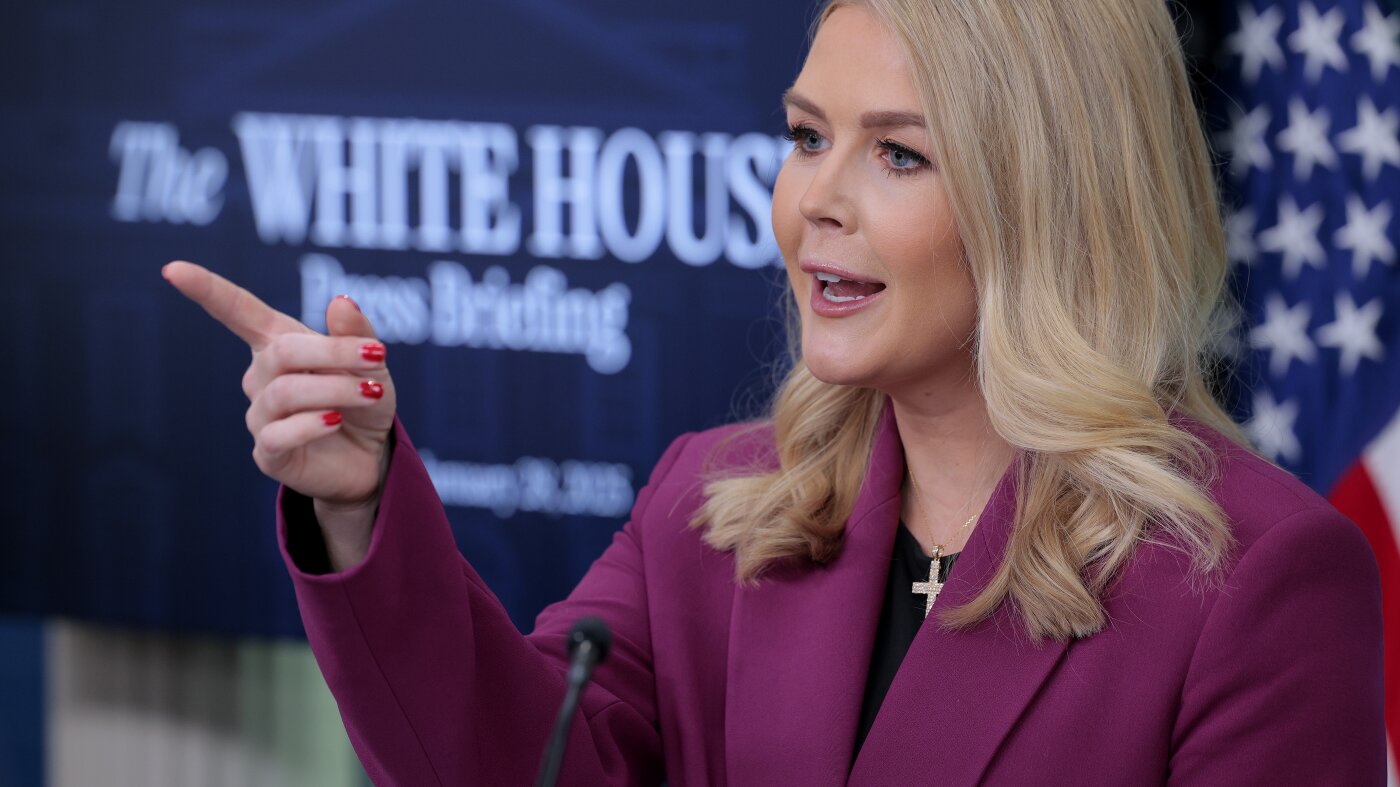
Leavitt has also referenced past criticism of her religious beliefs, including public remarks made by television host Jon Stewart that generated discussion online. Rather than removing the necklace, she has indicated that it continues to serve as a personal reminder of her convictions.
For many supporters, that consistency has become part of her public image.
Political analysts note that discussions about religion and public office are far from new in the United States.
Throughout American history, elected officials and government representatives from both major political parties have openly discussed their religious beliefs or worn symbols associated with their faith traditions.
Cross necklaces, yarmulkes, turbans, hijabs, and other religious attire have periodically become subjects of public conversation as Americans continue debating where personal identity intersects with official responsibilities.
Legal experts generally distinguish between government endorsement of religion and an individual’s personal expression of faith.
While the U.S. Constitution prohibits the government from establishing or favoring a particular religion, individuals serving in government positions retain constitutional protections for their own religious expression, subject to applicable laws and workplace policies.
That distinction explains why conversations like this often generate passionate opinions without simple answers.

The discussion surrounding Leavitt’s necklace also reflects today’s social media environment, where seemingly small personal details can rapidly become nationwide debates.
Within hours, thousands of users weighed in, not only on the necklace itself but also on broader issues including freedom of religion, freedom of expression, political identity, and expectations for public officials.
Interestingly, many participants viewed the conversation through different lenses.
Some saw the necklace primarily as a symbol of personal faith.
Others viewed it as a political statement.
Still others questioned why a piece of jewelry had become a national topic at all.
Those differing interpretations illustrate how public figures often find even the smallest aspects of their appearance subject to intense public scrutiny.
As of now, Karoline Leavitt has continued appearing at White House briefings wearing her cross necklace.

Neither the White House nor Leavitt has announced any change regarding the matter, and the discussion remains largely confined to public commentary rather than official policy.
Whether viewed as a quiet expression of faith or an inappropriate symbol for official settings, the necklace has succeeded in sparking a larger conversation about the role of personal beliefs in public life.
In the end, the debate is about far more than a single piece of jewelry.
It reflects enduring questions that Americans continue to discuss: How should public officials express their personal beliefs? Where should the line between individual freedom and institutional neutrality be drawn? And can one small symbol mean very different things to different people?
For now, those questions remain open—and the conversation continues