The Super Bowl Has Winners, But the Media Doesn’t: The Story Behind 130M vs 5M Views
Under the dazzling lights of the Super Bowl, Bad Bunny took to the NFL’s official stage and attracted approximately 130 million viewers—a colossal number, almost unchallengeable in the American television world.
It was traditional power in its purest form: mainstream stage, national airwaves, billion-dollar sponsorships, and an artist representing the globalization trend of contemporary popular culture.

But what truly startled the media wasn’t the numbers.
Because at the very moment America held its breath watching the official halftime show, in a completely different corner of the media landscape, a parallel broadcast opened up—quietly but deliberately.
The “All-American Halftime Show,” with Kid Rock as its central figure, was organized and broadcast live by Turning Point USA, without NFL backing, without a lavish stage, and without the backing of the national television network. Yet, this program still simultaneously attracted around 5–6 million viewers across multiple platforms.
130 million versus 5 million.
On the surface, this is an unfair comparison. But it is precisely this “unfairness” that reveals a deeper shift in the structure of American cultural power.

On Bad Bunny’s side is the familiar power: a centralized media system where an event is watched, discussed, and shared by the entire nation. That’s the old American model—where a single broadcasting center can define the shared experience for hundreds of millions of people.
On Kid Rock’s side and the “All-American Halftime Show” is a different kind of power: no permission is asked, no invitations are needed, no need to occupy the main stage. They create their own audience. And more importantly, that audience actively leaves the mainstream to find another option.
What worries the media isn’t “who wins” in terms of numbers. 130 million is still 130 million. The issue lies with those 5 million.
Those 5 million people didn’t just scroll past. They actively searched for the link, chose the platform, left the official broadcast, and stayed with a program that wasn’t heavily promoted. That’s a conscious act. And in media, conscious behavior is always more frightening than passive numbers.

Here, the polarization isn’t about music or artists. It’s about the question: who has the right to represent “America”?
Bad Bunny represents an open, multicultural America, integrated into the global flow. The “All-American Halftime Show,” on the other hand, speaks to those who feel left behind in that very story—those who believe the halftime Super Bowl has lost its original soul: family, faith, traditional identity.
The key point is: this time, the gap is still huge. But what if next time, the numbers aren’t 130 million versus 5 million? What if the gap narrows? What if more and more people aren’t just watching simultaneously, but are switching entirely to a “different stage”?
Then the Super Bowl will be more than just a sporting or entertainment event. It will become a symbol of a redistribution of media power—where the nation’s exclusive attention is no longer held by a single organization.
And that’s what makes this story impossible to ignore.
Because the question isn’t who’s holding the microphone today, but whether America will accept a single microphone tomorrow.
Son.The entire music community was stunned by the miraculous and unexpected turn of events in DJ Daniel’s battle against illness.
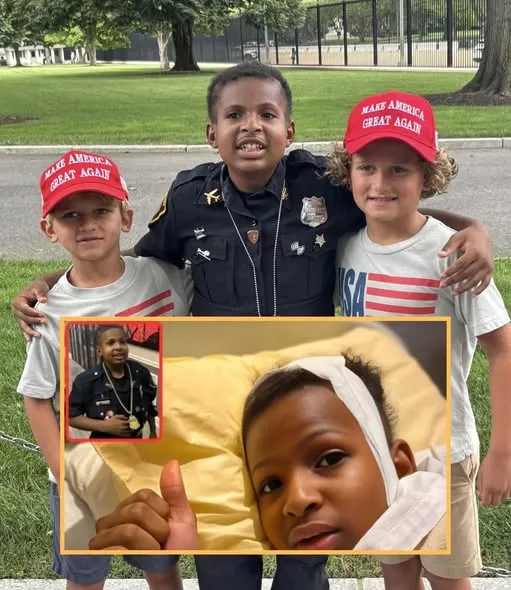
In the quiet hum of the hospital ward, where time seems to stretch into an agonizing eternity, moments of genuine hope are rare and precious. For DJ Daniel, a brave soul whose journey has been paved with more tears and heart-stopping fears than anyone should ever have to endure, the atmosphere was thick with anticipation. His family, his devoted medical team, and the thousands of supporters who have been following his story from afar were all holding their breath, waiting for a sign.