EXPLOSIVE: The close-up photo of Karoline Leavitt in Vanity Fair has unexpectedly become the center of intense controversy on social media. When photographer Christopher Anderson spoke out to defend his work and shared his personal perspective, it immediately sparked a massive wave of backlash from the MAGA community. Just a few words from him were enough to ignite a full-blown meltdown, far exceeding a simple photography story.
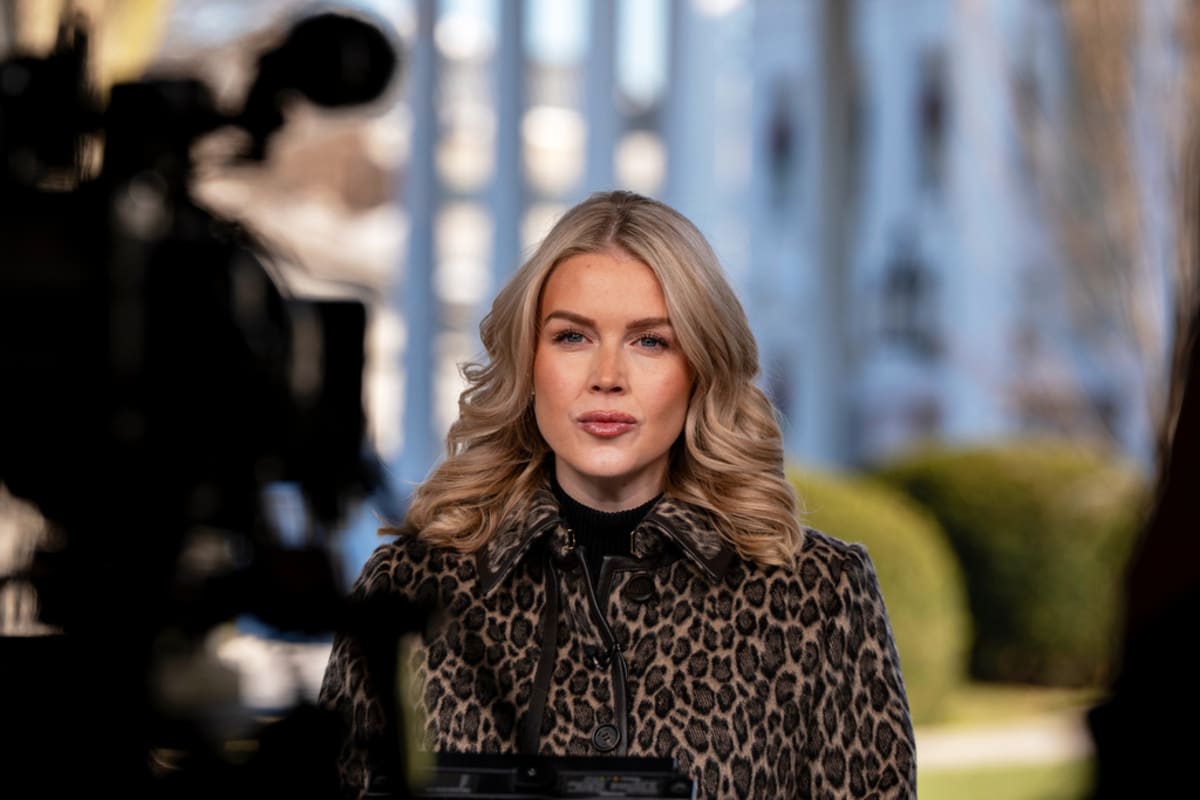
A close-up photograph of White House Press Secretary Karoline Leavitt published by Vanity Fair has unexpectedly ignited a fierce online backlash, transforming what might have been a routine editorial image into a full-blown cultural and political flashpoint. The image, shot by renowned photographer Christopher Anderson, spread rapidly across social media, where it quickly became the subject of intense scrutiny, mockery, and debate. What followed was not simply criticism of a photograph, but a broader eruption of anger from MAGA supporters who accused the magazine and the photographer of deliberately portraying Leavitt in an unflattering light.
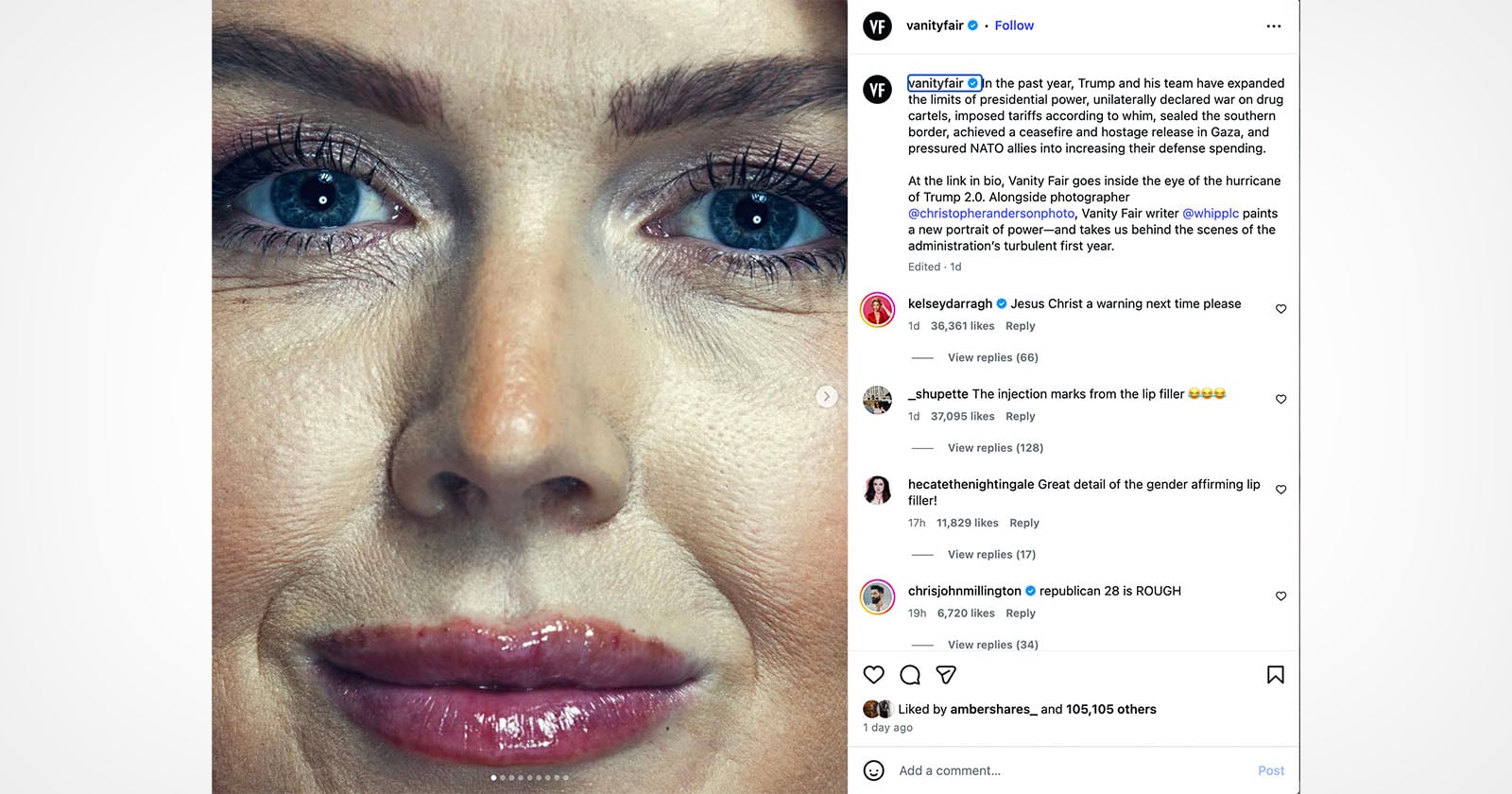
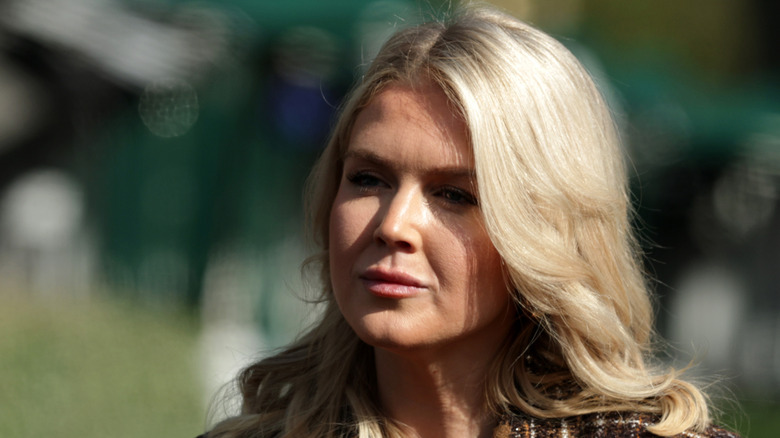
The photograph in question is an extreme close-up of Leavitt’s face, captured without filters or visible retouching. Almost immediately, online commentators seized on the image, claiming it made Leavitt appear significantly older than her actual age. Others focused on her makeup, describing it as overly heavy or “cake-y,” while some speculated about visible cosmetic procedures, such as lip fillers. Within hours, the image was circulating widely, detached from its original editorial context and reframed as evidence of what critics called unfair or even cruel treatment of a conservative woman in the media.
Christopher Anderson, the photographer behind the now-viral image, has since stepped forward to defend his work. Rather than backing down, Anderson expressed pride in the photograph and surprise at the level of outrage it generated. In interviews following the backlash, he emphasized that his intention was not to embarrass or attack Leavitt, but to present her exactly as he saw her through the lens. To him, the controversy revealed more about the public’s expectations of political imagery — especially of women — than about any malicious intent behind the photograph itself.
Speaking to The Washington Post, Anderson said he was taken aback by the assumption that he should have used Photoshop to smooth over blemishes or signs of cosmetic injections. He explained that he found it shocking that anyone would expect such alterations in a piece of photojournalism. From his perspective, retouching the image would have meant concealing reality rather than documenting it. He posed a pointed question: if presenting what he saw without manipulation is considered an attack, then what would it mean to intentionally edit and beautify the subject beyond how they truly appeared?
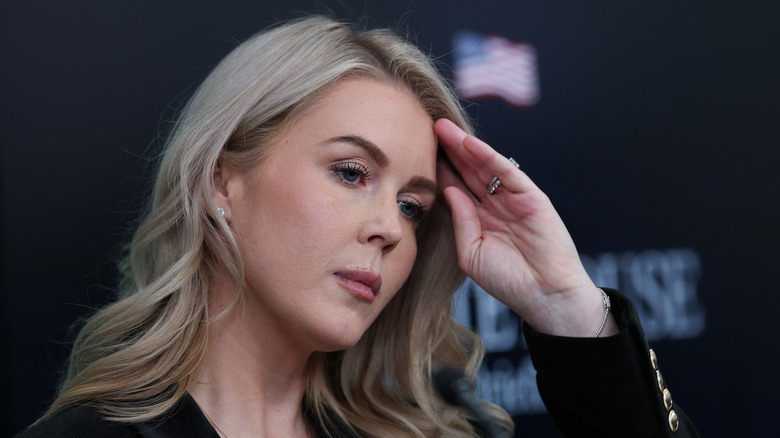
Anderson further argued that altering the image would have crossed an ethical line. He stressed that his work falls under the tradition of documentary photography, not personal branding or social media aesthetics. This was not a curated Instagram post designed to flatter the subject, but an editorial photograph meant to capture a real person in a real moment. To him, removing wrinkles, marks, or texture would have amounted to a lie — a distortion of truth rather than an act of kindness.
Despite his explanation, the response from many MAGA-aligned commentators was swift and furious. Online critics accused Anderson and Vanity Fair of singling out Leavitt because of her conservative politics. In comment sections across platforms, particularly under articles published by the Daily Mail, users claimed the photograph was intentionally cruel and represented a double standard in how conservative women are treated compared to their liberal counterparts.
Some commenters framed the controversy as an attack disguised as journalism. One wrote that liberals routinely disparage women while claiming to support them, while another argued that conservative women are uniquely targeted and mocked by what they described as a hostile media establishment. Similar reactions appeared in the comments under Vanity Fair’s own social media posts, where supporters accused the magazine of deliberately choosing the most unflattering possible image.
A recurring accusation was that Anderson would not have treated other subjects the same way. One commenter challenged him directly, suggesting that his other close-up portraits were likely Photoshopped and that Leavitt was singled out. Anderson has firmly rejected this claim. In an interview with The Independent, he stated that extreme close-up portraiture has been a defining feature of his work for years and that he has photographed people of all political ideologies using the same approach.
According to Anderson, the Leavitt image is not an anomaly but part of a consistent artistic and journalistic style. He explained that he has long been interested in intimate, unfiltered portraits that emphasize human texture and presence rather than polished perfection. From his perspective, the outrage stems not from inconsistency in his work, but from discomfort with seeing a powerful public figure presented without the protective veneer of digital enhancement.
Yet, for many of Leavitt’s supporters, no explanation seems sufficient. To them, the absence of retouching itself is seen as an act of hostility. The expectation that public figures — especially women — should be softened, smoothed, and idealized remains deeply ingrained, and Anderson’s refusal to comply with that expectation has been interpreted as a deliberate slight. The controversy has thus moved far beyond a single image and into a broader debate about beauty standards, media bias, and the role of journalism in portraying those in power.
Ironically, the backlash has only amplified the photograph’s reach. As critics and defenders argue online, the image continues to spread, reaching audiences far beyond Vanity Fair’s usual readership. Each new wave of outrage has driven further engagement, ensuring that the photograph remains firmly in the public eye. What began as a single editorial choice has evolved into a case study in how controversy fuels virality.
At the heart of the debate is a deeper question about authenticity and representation. Anderson has made it clear that his goal was not to humiliate, but to resist the increasingly common impulse to sanitize reality. In an era dominated by filters, retouching, and carefully curated public personas, his photograph challenges viewers to confront an unpolished version of a political figure — something that many clearly find uncomfortable.
Whether one views the image as honest journalism or unnecessary provocation largely depends on one’s political lens. But what cannot be denied is that the photograph has struck a nerve. It has exposed the fragile boundary between documentation and interpretation, and highlighted how quickly artistic choices can become politicized. As the debate continues, the image of Karoline Leavitt remains a lightning rod — not because of what was done to it, but because of what was deliberately left undone.